

In this manuscript IIG focuses IMPEPHO –an indigenous medicinal plant. For generations, Impephohas been used as a gateway to the spiritual world, where elders/traditional healers would burn it when consulting with the ancestors and to cleanse negative energies, evils spirits alsoused to steam, but that is not all that there is to this indigenous African plant that is vastly used by our different tribes in SA. Helichrysumodoratissmumis the scientific name for the plant belonging to the Asteraceae(plant family).
The younger generation’s lack of knowledge of this native plant’s medicinal applications has been identified as a problem. Majority of today’s youth only recognise Impephoas a plant that has cultural uses. Our intention is to modernise medicinal use and make it accessible to everyone, young and old, by teaching young herbalists how to make simple Impephoremedies while preserving Impephoculture and tradition.
THE BIOLOGY OF THE PLANT
The name imphepho used in Southern Africa refers to around 250 species from the genus Helichrysum.
Kingdom : Plantae
Family : Asteraceae
Genus : Helichrysum
Popular Species : H. petiolare & H. odoratissimum.
Synonyms : H. petiolare & H. odoratissimum.
Common names for this plant in South Africa are – Impepho (IsiXhosa), Imphepho (IsiZulu), Kooigoed (Afrikaans), Impepho (Other Nguni tribes) Phefo-ea-setlolo (Sesotho), Everlasting (English), Hottenotskruie (Afrikaans)
Distribution
Endemism – Not endemic to South Africa
Provincial distribution : Eastern Cape, Free State, KwaZulu-Natal, Limpopo, Western Cape.
Description
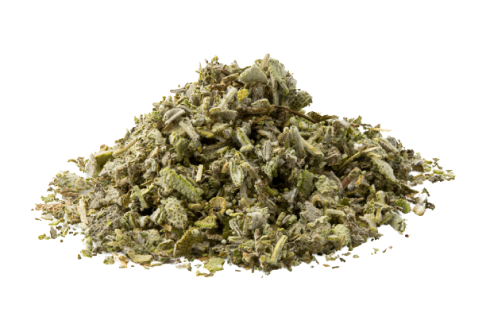
Impepho is a perennial herb or shrublet with a potent scent. The plant has a maximum height of 25 cm. The leaves are oval shaped, silver in color, and heavily aromatically haired. The pedicellates on the flowers are quite short.
Cultivation
The majority of Imphepho is harvested from the wild because the plants grow prolifically in gardens and the wild; there is no information on commercial cultivation in South Africa. Species of Helichrysum used as Imphepho are hardy and versatile, growing in a wide range of soil types, being drought resistant, wind resistant, and withstanding light frost.
This plant prefers sun to partial shade with well drained soil, moist, rich and loamy with temperatures between 50 and 55°C. It should be planted in autumn and it is set out in groups of 3 to 5. It is cultivated without the use of fertilizers.
CULTURAL AND MEDICINAL USES OF IMPEPHO
Cultural Usage
Impepho is an indigenous African plant that, once dried, is burnt in order to communicate with one’s ancestors. It is also used as a ritual incense to invoke the ancestral spirits, cleanse negative energy, and calm the evil spirits.
It is used in various ceremonies, as well as in traditional feasts, when chickens, goats or cows are offered to the ancestors. These ceremonies and traditional feasts include umemulo (the ceremony to celebrate girls’ puberty rights), ukubuyisa (the bringing back home of a dead relative’s spirit), funerals, and occasions of thanksgiving.
The plant is mainly used in traditional ceremonies and rituals as well as African traditional medicine, but it may be used privately by individuals from time to time to ward off evil, dispel negativity, for meditation or other such purposes. In order to experience the effects of Imphepho the smoke must be breathed in for some time.

Imphepho is an important part of African traditional medicine and rituals and the plant is revered, however little to no effort is made to protect areas in which the plant commonly grows. This may be because the plant is very common in Southern Africa.Even though Imphepho is normally associated with African traditional beliefs, it is often burned as incense in South African Christian churches.
Imphepho is an important part of African traditional medicine and rituals and the plant is revered, however little to no effort is made to protect areas in which the plant commonly grows. This may be because the plant is very common in Southern Africa.Even though Imphepho is normally associated with African traditional beliefs, it is often burned as incense in South African Christian churches.
It is assumed that its use is similar to that of frankincense and not associated with honouring the ancestors. The plant is commonly available and seldom sold for much money, it is difficult to say whether it is seen as a ‘holy’ or ‘sacred’ plant. The plant is believed to increase the spiritual awareness and psychic abilities of those who use it. A dried bundle of Impepho is usually burnt in the middle of a room or hut in a potsherd. The smoke has a smell which is not always liked by everyone, it has been described as being similar to mildew and camphor with fenugreek overtones.
Medicinal Usage
The leaves are used to make an infusion to treat asthma, chest problems and high blood pressure. The smoke of the burning leaves is inhaled as a pain reliever. The leaves are also widely used on wounds to prevent infection.
Imphepho is boiled either in water or milk to make a tea, it is used internally to treat coughs, colds, fever, infection, menstrual pain, headaches, insomnia and even allergies and diabetes. In addition, the decoction of the leaves of the plant is used in traditional beauty therapy to refine skin texture/looks and for wound healing.
According to Stafford, Jager, and van Staden (2005), imphepho contains the GABA-receptor binding effect, a “significant inhibitory neurotransmitter chemical responsible for relaxation,” which has been shown to have psychoactive properties. Improving spiritual practise by inhaling imphepho promotes a calm and relaxed state of mind. The psychoactive effect increases with higher doses.

Benefits of Impepho
- Enhances concentration and focus
- Fights depression
- Relieves headaches
- Prevents infections
- Increases motivation and positive energy
- Stimulates creativity
- Aids with insomnia
CASE STUDY SUMMARY
Background
According to the World Health Organization atlas (2002), “traditional medicine (TM)” refers to health practices, approaches, knowledge, and beliefs incorporating plants, animals, and mineral based medicines, spiritual therapies, and manual techniques applied individually or in combination to treat, diagnose, and prevent illnesses or maintain wellbeing. It is worth noting that the description of TM given by the WHO in 2002 may have altered in some respects since then.
Traditional medicine (TM) is being used more frequently all over the world, more especially in South Africa by traditional healers and practitioners. However most often these are choices made by believers and individuals. Integrating traditional medicine into mainstream health care requires research to understand the efficacy, safety, and mechanism of action of traditional medicinal systems.
While there is an increase in the use of traditional medicine worldwide, research in this area is inadequate, with serious difficulties in accepting the studies previously conducted. Some of the main reasons why the studies conducted are considered flawed and inadequate are small sample sizes, variable or inconsistent results, and inadequate research designs. Other problems include insufficient statistical power, poor controls, inconsistency of descriptions of the product.
This research was done on Impepho, with an attempt to conform to the model for conventional usage as well as with the goal of integrating Impepho into mainstream spiritual usage, and healthcare with sufficient knowledge about the efficacy, safety, and mechanism of positive actions of the plant. This research project was categorized and conducted as follows:
- Experimental and quasiexperimental research.
- Reviews, descriptives, historical records, interviews with relevant bodies, case historical studies.
Objectives
- To gather, document and disseminate general and evidenced based information on impepho indigenous medicine and its therapies.
- To initiate a database, collaborate with various institutions working in indigenous medical traditions in South Africa through workshops and seminars.
- To develop frameworks and strategies for the formulation, implementation and the recognition of indigenous medicines and therapies amongst the youth and adults which will allow preservation of IKS to be seen for generations to come.
Findings
A cross-sectional study was conducted with a total of 718 people that participated in the survey. The participants were of varying age groups between the ages 18 to 85. Although the questionnaire consisted of 11 questions, only 5 questions were aimed at gauging how knowledgeable are people on the topic being addressed.
- Are you well knowledgeable on Indigenous Knowledge Systems (IKS)
- Are you aware of Impephoas a plant, its spiritual uses and curative healing properties?
- Do you think that curative traditions of healing and medicine would be better preserved if traditional IKS are infused with modern systems?
- Do you think the modernisation of the delivery of traditional IKS would promote or increase youth involvement?
- Would you use ready-to-use Impephoproducts, eg: Soap, Tea, Oils, Sage?


Discussion
Research on Indigenous Knowledge Systems (IKS) in second and third world countries has been unpopular for years, mostly due to the lack of resources, proper surveillance systems as well as funds. The few studies conducted are generally point studies or surveys and are conducted within isolated regions, tribes or age groups.
This study was also a point cross sectional study, however with a wider range in reference to region, tribe and age group. The study targeted three provinces (North West, Mpumalanga and Northern Cape), three races (African, Colored and White) and people between the ages of 18 to 85.
With the sample size of 718 participants, this study yielded the following results based on the questions asked, only 32% of the were aware of IKS with the other age groups falling below 30% as expected. Most groups had a fare knowledge of Imphepho and its uses (over 50%) however the white race, across the different age groups were less knowledgeable.
An average of 82% of the participants agreed that modernizing the delivery of IKS would better preserve IKS as well as promote and increase the participation of the younger generation. An average of 87% of the participants were pro the use of ready-to-use Imphepho products, only 27% of the elders were for this idea and the rest of the elders believe that this idea would take away fro the essence of the plant thus making it less affective.
Limitations
- Population size – less then the targeted size of 3000 participants was reached, with an even less demographic of the white race reached.
- Resources – Not enough funds were acquired to conduct the full scope of the study.
Conclusion
Studies on IKS may prove to be difficult in the Sub-Saharan countries, due to lack of resources in place, however it is not impossible. With more studies of this nature, conducted randomly as either cross sectional / retrospective or co current studies with larger demographics would yield a better database of evidenced based information on impepho indigenous medicine and its therapies.
This would enable the development of frameworks and strategies for the formulation, implementation and the recognition of indigenous medicines and therapies amongst the youth and adults which will allow preservation of IKS to be seen for generations to come.
IGG with assistance from the NHC has managed to achieve the objectives it intended to reach with this study and the outcomes will serve as a foundation to widen our research, cultural, archival and educational use on indigenous knowledge systems relating to South African heritage and finding more innovative and modern methods to preserve culture while making the knowledge easily accessible to the general public.
By collaborating with other institutions working in indigenous medical traditions across South Africa and through workshops and seminars, IIG will be able to teach about Cultural & Archival research on African, indigenous knowledge systems relating to curative traditions of healing and medicine especially to the young generation to improve the health and well being of our people, under the framework of healthy minds and bodies.
IMPHEPHO PRODUCTS
Imphepho – Traditional Packaging
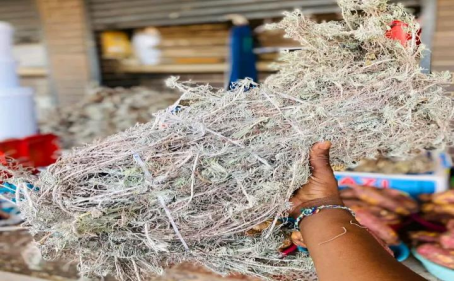

Imphepho is sold in medium to big sized bundles once harvested and is commonly found in traditional markets along with other traditional medicines. In this ‘raw – form’ one may use the plant anyhow for any use – i.e burnt for invoking spirits, boiled for drinking or steaming, making a past for wounds.
Imphepho Smudge Sticks or Sage Bundles


Smudge Sticks or Sage Bundles are much smaller bundles that are pre packed for easy use at home, they are used to invoke or invite spirits into the home or before a ritual/ceremony. They can be used to cleanse the home or one’s personal space, to remove negative energies. This is done by burning the smudge stick. The advantage of this pre packing is that it compatible, less messy, long-lasting and easy to store.
Imphepho Tea


Imphepho is drank as tea for a number of medicinal uses, this includes :
- Treating fevers and colds.
- Treating insomnia and help calm anxiety.
- Helps treat infections.
- Detoxing.
The tea is made by adding boiled water to the plant in a cup, let it simmer for 2-3 minutes and drink. Imphepho tea bags are also available commercially.
Imphepho Soaps and Candles


Both soaps and candles can either be infused with Imphepho or they may contain extracts of the plant.The soap is used for personal cleansing and it promotes healthy skin. The candles are used for praying, for calming affects or insect repellent. Both are available commercially and are becoming popular amongst the younger generation as it ready-to-use which makes it convenient as there is no preparation time required before use.
REFERENCES
- Plants of the World Online. Board of Trustees of the Royal Botanic Gardens, Kew. 2017. Retrieved 3 December 2020.
- Medicinal Plants of South Africa by Ben-Erik van Wyk, Bosch van Outshoorn and Nigle Gerike, Briza Publications, 2002.
- von Staden, L. 2010. Helichrysum odoratissimum (L.) Sweet. National Assessment: Red List of South African Plants version 2020.1. Accessed on 2023/10/03.
- Muthi and Myths From the African Bush by Heather Dugmore and Ben-Erik can Wyk, Marula Books, 2008.
- Lourens, A.C.U.; Reddy, D.; Başer, K.H.C.; Viljoen, A.M.; Van Vuuren, S.F. (2004).
- Scott G., Springfield E.P., Coldrey N. A pharmacognostical study of 26 South African plant species used as traditional medicines. Pharm Biol. 2004;42:186–213. doi: 10.1080/13880200490514032. – DOI
- http://www.plantzafrica.com/planthij/helichryspet.htm
- http://powo.science.kew.org/taxon/urn:lsid:ipni.org:names:213170-1#synonyms